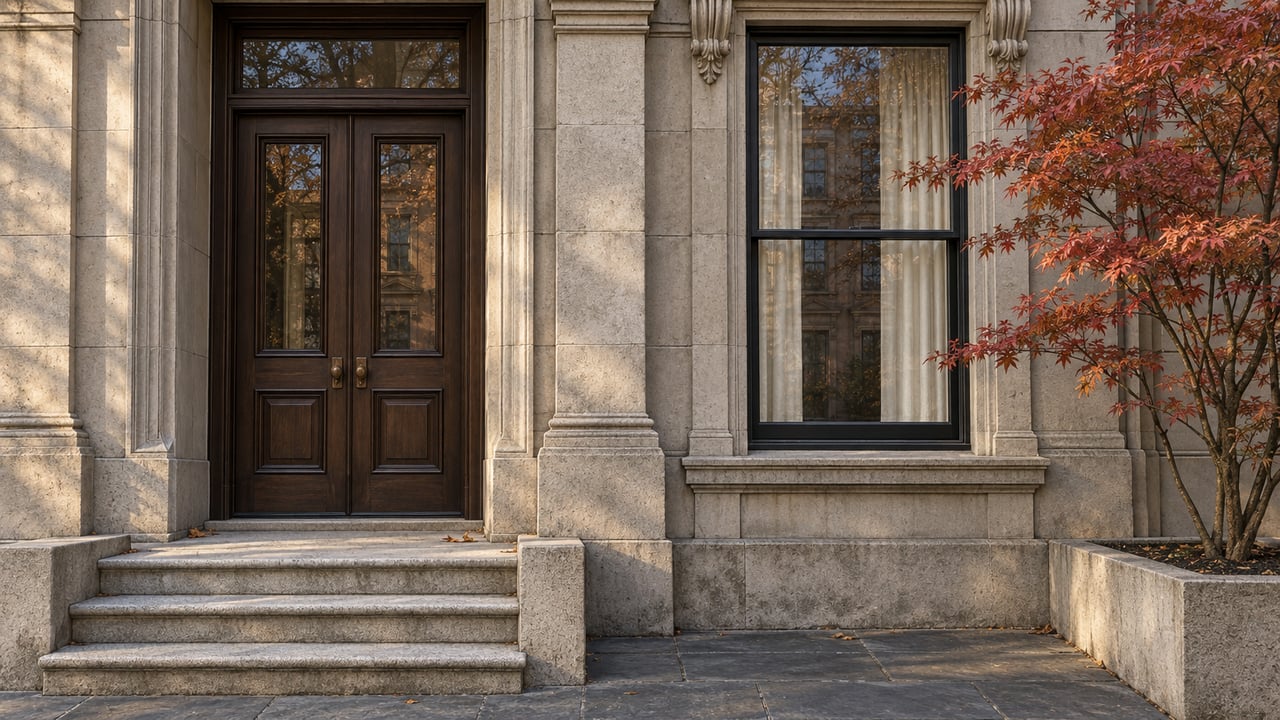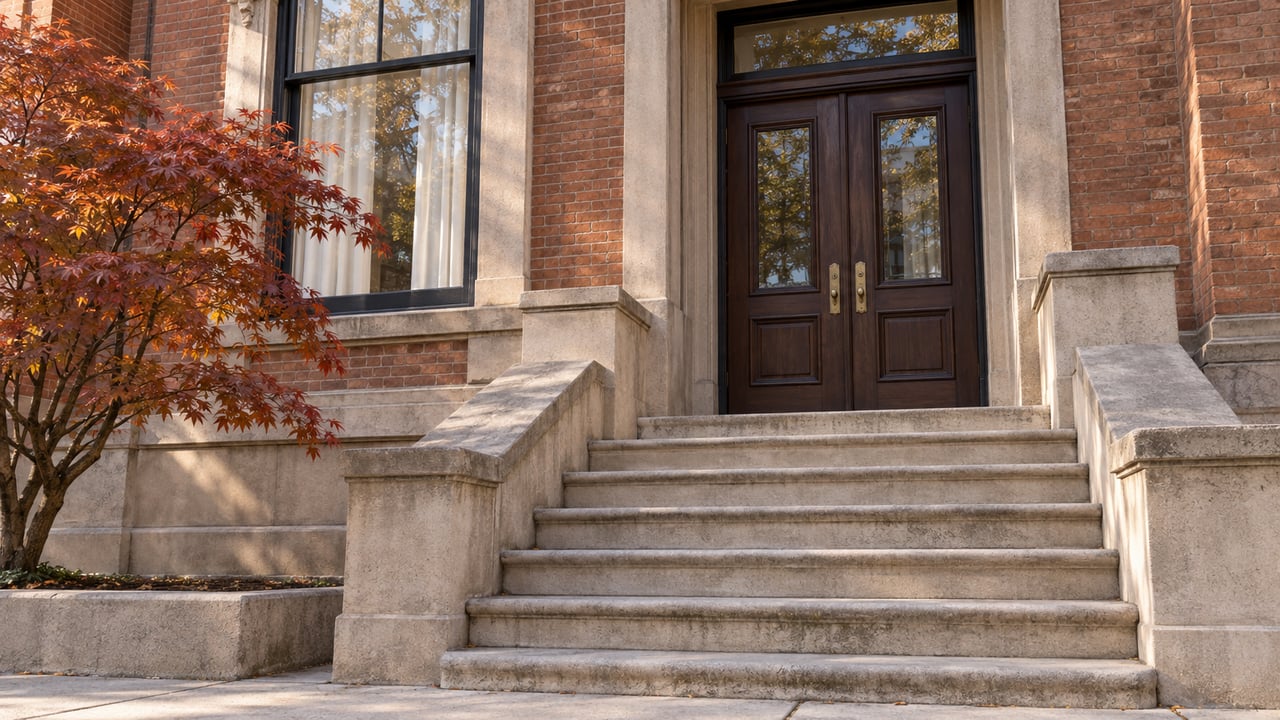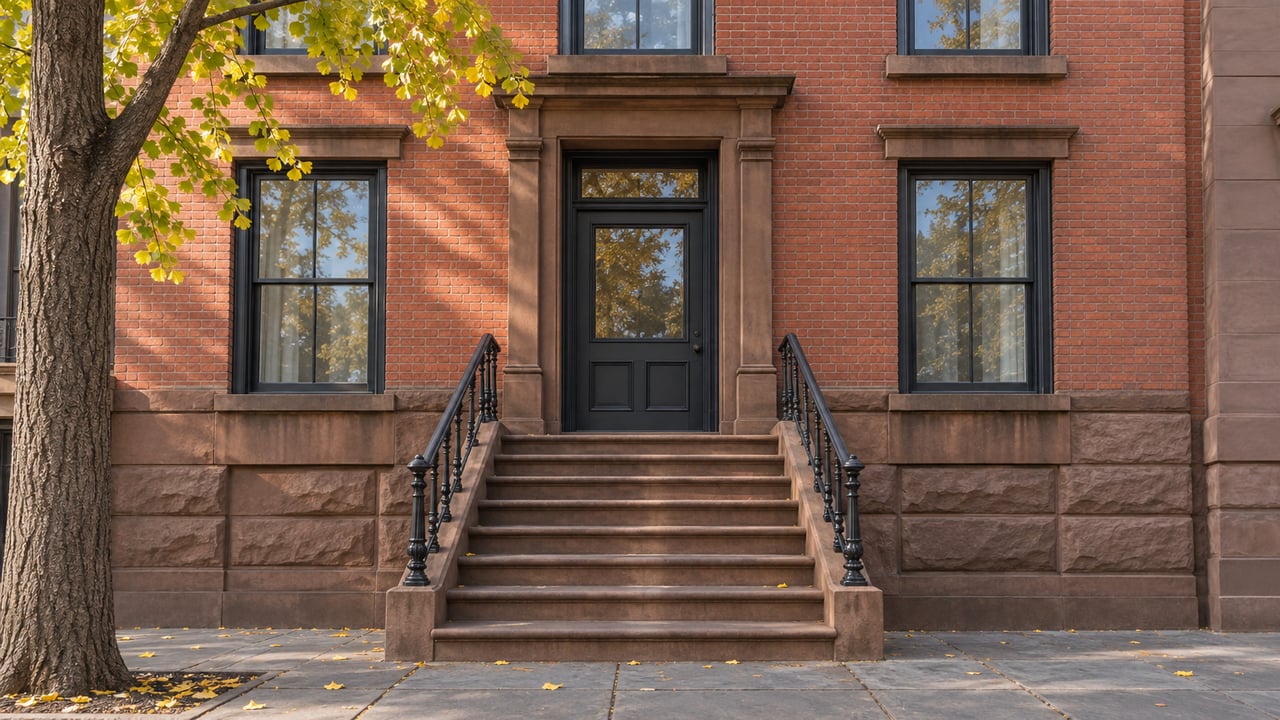
Two apartments, same block above 72nd Street. One is a prewar co-op with 3,000 square feet, a wood-burning fireplace, and a Rosario Candela pedigree. The other is a new-construction condo half its size on Second Avenue. In Q4 2025, Miller Samuel put the median Manhattan co-op at roughly $825,000 and the median condo at roughly $1.66 million. The gap has widened for three quarters, and the reflex explanation, that condos are simply "better," misses what is actually happening on the Upper East Side.
The discount is not a signal that co-ops are worth less. It is the price the market pays for friction.
The Number That Contradicts the Headline
The Real Deal's Q2 2026 data analysis recorded the Manhattan median co-op sale price at $895,000, up 8.5 percent year over year. Median condos rose only 2.9 percent. New development condos rose 7.6 percent. So co-ops, the property type "everyone" is supposedly rotating out of, posted the highest price gain of the three categories.
Read that alongside the UES-specific picture in early 2026: a $1.4 million median sale price, price per square foot near $1,320 (up roughly 10 percent year over year), and co-op contract activity down 15 percent year over year. Lisa Lippman of Brown Harris Stevens told The Real Deal that buyers "are realizing co-ops are good value" and that co-ops "tend to be in the best locations, too."
Fewer contracts. Higher clearing prices. That is not a soft market. That is a selective one.
| Q4 2025 Manhattan snapshot | Co-op | Condo |
|---|---|---|
| Median sale price | ~$825,000 | ~$1,661,000 |
| Average monthly carrying charge | ~$2,938 (maintenance) | ~$5,013 (common charges + taxes) |
| Typical down payment expected | 20–50% | 10–20% |
| Board approval | Discretionary, interview | Right of first refusal only |
Source: Douglas Elliman / Miller Samuel Q4 2025 Elliman Report.
What the Discount Actually Buys
The co-op price gap is not aesthetic. It is procedural. On the most established Fifth and Park Avenue buildings, boards routinely require post-closing liquidity in multiples of the purchase price, cap financing at 50 percent (some lines require all cash), and demand full transparency on financial holdings, references, and in-person interviews. The board package, review, and interview commonly add four to ten weeks to a co-op timeline. A condo resale with financing in hand often closes in 30 to 60 days.
Every one of those requirements narrows the buyer pool. A buyer holding wealth in an LLC, a trust with non-disclosed beneficiaries, or foreign-currency-denominated assets cannot clear a traditional Park Avenue board no matter how large the balance sheet. That buyer moves to a condo. The condo market absorbs the global capital. The co-op market clears at what W-2 New Yorkers with documented liquidity are willing to pay.
That is the mechanism. Global capital cannot enter half the housing stock, so it concentrates in the other half. The condo premium is not a quality premium. It is a liquidity premium.
For a qualified buyer who can clear a board, the arithmetic inverts. You are competing against a smaller pool, in a segment where Q1 2026 saw only 81 new development units launch across all of Manhattan (roughly 75 percent below the 10-year average, per Miller Samuel), and where UES co-op contracts specifically are down 15 percent year over year. Well-located classic sixes and sevens on Park, Madison, and Fifth are negotiable in a way they have not been in years.
The Four UES Micro-Markets
The Upper East Side is not a single market. Pricing behavior changes materially block by block.
Carnegie Hill (86th to 96th, Fifth to Lexington) is the highest-priced sub-market. Co-op medians sit near $2 million and condos closer to $3.1 million. Inventory is deep in landmark prewar stock, and boards here are among the most demanding in the city. The friction discount is largest here in absolute dollars.
Lenox Hill (60s and 70s, Fifth to Third) contains the trophy tier. The Q2 2026 top Manhattan co-op sale was a duplex at 740 Park Avenue at $38 million. A unit at 895 Park sold for $20 million in Q1. These transactions clear in a private layer that the Miller Samuel medians barely touch, but they anchor pricing psychology for the merely expensive apartments below.
Yorkville and the East End Avenue corridor hold the highest concentration of new-development condominium product on the Upper East Side, particularly along Second Avenue post-subway. Smaller floorplates, family-oriented layouts, in-unit laundry, central HVAC. These are where a global buyer without W-2 documentation lands. The premium is real, and it is largely paying for the ability to close.
West of Lexington remains co-op territory. The compensation for the friction: scale (10-to-15-room layouts), architectural quality from names like Candela, Carpenter, Sloan, and Mott B. Schmidt, and continuity. These are buildings that trade on multi-generational timelines, not transactional flow.
Who Pays the Friction, Who Doesn't
Frame the choice around your own liquidity structure, not the property type in the abstract.
If your wealth is held in a US-domiciled name, documented through tax returns and brokerage statements, and you plan to hold for a decade or longer, the co-op discount is the most persistent inefficiency on the UES. You can trade $200 to $300 per square foot less for the identical block, the identical light, the identical park frontage, in exchange for four to ten weeks of paperwork and a signature on a house rules book.
If you need to close in 45 days, if you hold assets through an LLC or family trust, if you may want to rent the apartment out in year three, or if you are buying as a pied-à-terre from abroad, the condo premium is not a markup. It is a fee for optionality, and you are getting what you pay for. Attempting a co-op purchase in that profile usually ends in a rejected board package and a lost deposit on the next contract.
Two additional line items worth pricing into either path. New York State's mansion tax begins at 1 percent on residential purchases of $1 million and above and tiers up from there; the Department of Taxation and Finance Publication 577 has the current brackets. And Manhattan supply overall sat at 6,098 active listings in mid-July 2026 per UrbanDigs, down 9.9 percent year over year, so both sides of the co-op/condo choice are being made against a genuinely thin market.
What This Means for a Buyer This Fall
Three practical moves follow from the friction thesis.
First, do not shop by product type. Shop by which product type your financial profile can actually clear. That determination happens before the first showing, with a broker and an attorney who can read a building's requirements against your statements.
Second, if you can clear a board, look at buildings where recent trades suggest boards are quietly accepting slightly lower financials than they did in 2022 and 2023. Contract activity down 15 percent means boards are seeing fewer packages, and thin pipelines change behavior more than public statements do.
Third, treat the condo premium as a service charge, not a design tax. A 1,100-square-foot Second Avenue condo at $1.85 million and a 2,400-square-foot Park Avenue co-op at $2.1 million are not the same product priced differently. They are two different transactions serving two different buyers. The right answer is the one your capital structure supports.
FAQ
Are Upper East Side co-op prices actually falling? Not on a closed-sale basis. Q2 2026 TRD data shows Manhattan median co-op prices up 8.5 percent year over year. What has fallen is contract volume, which is down roughly 15 percent on the UES. Fewer buyers are engaging with the product, but the ones who do are paying more for the best of it.
Why don't international buyers just get around the co-op board? Most established UES boards require full personal disclosure of the buyer's name on the shares, US-documented income, and post-closing liquidity held in named US accounts. LLC and trust ownership is generally not permitted, and privacy-preserving structures are the specific concern boards were designed to screen. This is not a rule that has flexed meaningfully in decades.
Is a condo always faster to close? Usually. Condo resales with financing in place close in 30 to 60 days versus 45 to 90 for co-ops after a fully executed contract. But condo boards do exercise the right of first refusal, and new-development condos with sponsor units can carry their own review layers. Ask about the specific building, not the category.
Does the mansion tax apply to both? Yes. New York State's mansion tax attaches to residential purchases of $1 million or more regardless of whether the interest transferred is real property (condo) or shares in a cooperative (co-op). Rates and brackets are in NYS Publication 577.
If you are weighing a specific building, a specific block, or a specific board's tolerance for your financial profile, Irene Sarri works one relationship at a time and reads these packages before you write them. Let's Connect.