If your work spans cities, time zones, or even continents, where you live needs to do more than give you an address. It needs to help you move efficiently, stay connected, and make daily life feel manageable in a fast-paced market. In Manhattan, that balance is a big part of the appeal, and understanding how it works can help you decide whether this borough fits your lifestyle. Let’s dive in.
Why Manhattan Works for Global Professionals
Manhattan offers an unusual mix of density, opportunity, and connectivity in a very small geographic area. Census QuickFacts estimates 1,664,862 residents in 2025 and about 74,781.6 people per square mile, which helps explain why so much of daily life is built around proximity and convenience.
For professionals whose schedules depend on access, Manhattan stands out because of how many people, businesses, and services operate close together. In 2023, New York County had 93,904 employer establishments and 2,322,720 total employment. That scale supports a practical base for finance, media, law, consulting, tech, and other knowledge-work fields.
It is also a highly international environment. The Census reports that 28.2% of residents are foreign-born, 36.9% of households speak a language other than English at home, and 64.2% of adults hold a bachelor’s degree or higher. If you are relocating from abroad, splitting time between markets, or working with clients across cultures, that profile can make Manhattan feel especially navigable.
Connectivity Supports Modern Work
For many global professionals, home is also part office, meeting point, and travel hub. Manhattan’s digital readiness supports that rhythm, with broadband subscriptions in 92.4% of households according to the Census. That matters when your day includes video calls, hybrid work, and real-time communication across regions.
Income levels also help frame the local environment. The county’s median household income is $103,931, which reflects a market shaped by professional services and high-demand urban living. While every neighborhood and building offers a different experience, the broader picture is one of a connected, fast-moving, service-oriented borough.
Getting Around Without a Car
One of Manhattan’s biggest advantages is that many daily trips do not require a car. The Census reports a mean one-way commute of 31.2 minutes for New York County workers, and the borough’s transit network plays a major role in making that possible.
The MTA describes New York City Transit as the country’s most extensive and highest-ridership subway and bus system. Its regional rail network also includes the Long Island Rail Road and Metro-North Railroad, two of the busiest commuter railroads in the country. For you, that can translate into more flexibility when commuting to meetings, reaching outer boroughs, or connecting to the broader region.
Many Manhattan routines are multimodal rather than car-based. In Lower Manhattan, the World Trade Center campus notes that public transportation is the easiest way to reach the area, with access through the Oculus Transportation Hub and Fulton Transit Center. PATH also serves as a key transit connection to neighboring New Jersey communities, while ferry, bike, ride-share, and parking options add flexibility.
Airport Access Matters
If you travel often, airport access is part of the lifestyle equation. Manhattan sits within a region served by JFK, LaGuardia, and Newark Liberty airports, all operated by the Port Authority of New York and New Jersey. For frequent flyers, that regional access helps support Manhattan’s role as more than just a residential address.
This is one reason many professionals choose Manhattan as a headquarters base. You are not simply choosing a home. You are choosing a place that can support domestic travel, international departures, client meetings, and quick returns to the city.
Manhattan Neighborhoods Offer Different Tradeoffs
Manhattan is not one uniform residential experience. NYC Planning identifies 12 Manhattan districts that include areas such as the Financial District, Tribeca, Greenwich Village and SoHo, Chelsea, Midtown, Turtle Bay, the Upper West Side, the Upper East Side, Morningside Heights, Central Harlem, East Harlem, and Washington Heights and Inwood.
That variety matters because global professionals often prioritize different things at different stages. You may want a shorter commute, easier airport access, a quieter residential feel, or a location close to offices, dining, and cultural institutions. In Manhattan, those tradeoffs can shift significantly from one area to another.
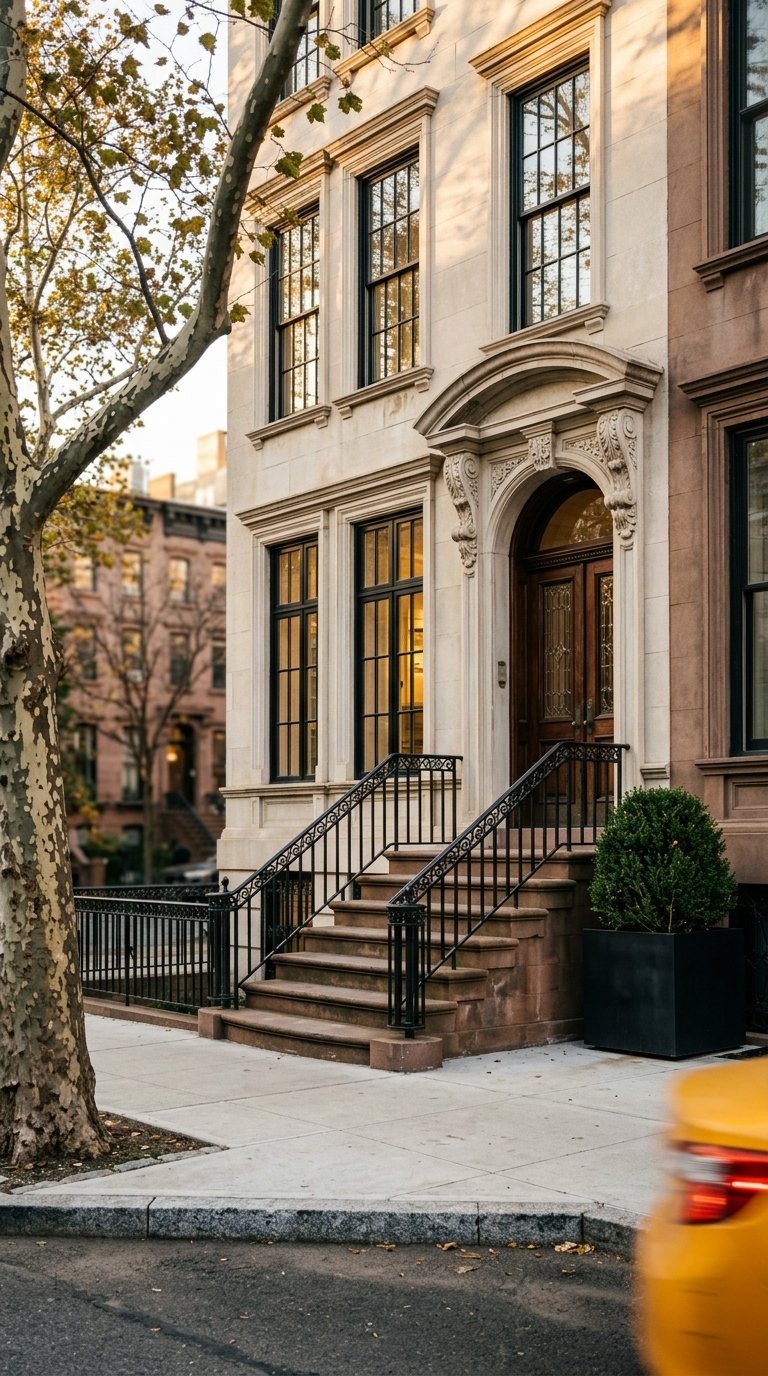
Some locations may appeal because they simplify regional travel or downtown business access. Others may stand out for architecture, established residential blocks, or proximity to parks and museums. The right fit often comes down to how you want your daily routine to function.
Culture and Green Space Stay Close
A common misconception is that living efficiently in Manhattan means sacrificing breathing room. In practice, the borough offers major cultural and outdoor assets within close reach. Central Park alone spans 843 acres and welcomes more than 42 million visitors annually, according to the Central Park Conservancy.
That scale gives many residents a meaningful way to reset during a busy week. Depending on where you live and work, a walk through the park, a quick museum visit, or an evening performance can fit into an ordinary day rather than requiring a major outing.
NYC Tourism also continues to highlight cultural activity across neighborhoods including the West Village, Upper East Side, Seaport, Harlem, and Midtown. For professionals who value access to the arts, dining, and public space, Manhattan offers a lifestyle that can feel both productive and richly urban.
What Housing Looks Like in Manhattan
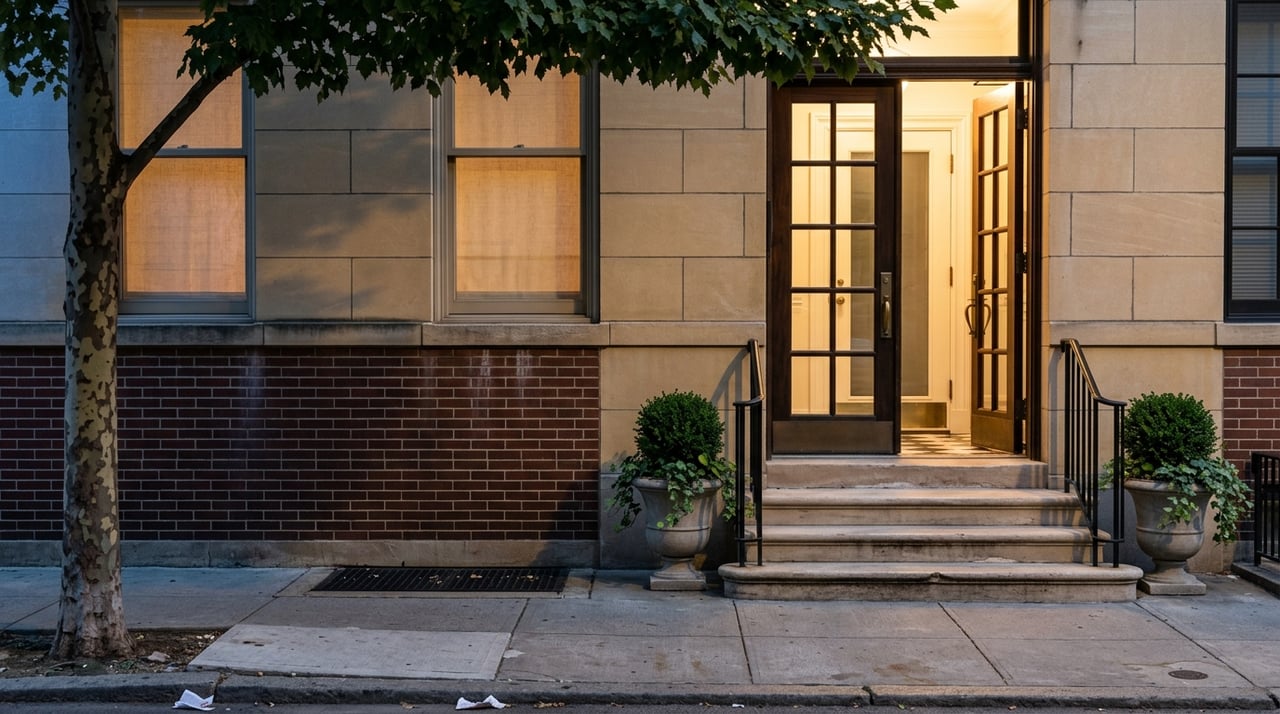
If you are moving from a market where detached homes are the norm, Manhattan requires a different mindset. The housing stock is overwhelmingly apartment-based, and most practical choices are rentals, condominiums, and cooperatives rather than single-family houses.
Census QuickFacts shows an owner-occupied housing rate of 25.1% in New York County, a median value of $1,090,500 for owner-occupied housing, and a median gross rent of $2,197. The NYC Comptroller also notes that one- and two-family homes are almost exclusively found outside Manhattan, which reinforces how apartment-oriented the borough is.
This matters because your housing search is usually less about finding a house and more about choosing the right apartment format for your needs. In Manhattan, that often means weighing lifestyle, building type, ownership structure, and location all at once.
Rentals, Condos, and Co-ops
For most professionals, the first major housing decision is whether to rent or buy. If you need flexibility, expect frequent travel, or are testing a neighborhood before making a longer-term commitment, renting may offer the easiest path.
If you plan to own, condos and co-ops make up a major part of the market. New York City Housing and Vacancy Survey findings note that in 2021 roughly 832,000 housing units citywide were in condo or co-op buildings, and those buildings often included renter-occupied units as well. That helps show how central these property types are to New York housing.
Each option supports a different lifestyle and strategy. A rental may support speed and flexibility, while a condo or co-op may better fit a long-term residential plan. The right choice depends on your timeline, budget, priorities, and how often you expect to use the home.
The Rental Market Moves Fast
If you are considering a Manhattan rental, timing matters. The city comptroller’s March 2026 outlook reported that residential rents were up nearly 6% year over year in January and February 2026, with even steeper gains in Manhattan and inventory trends that were most pronounced there.
In practical terms, that points to a tight market with strong demand. If convenience and location are high on your list, you should expect competition and the need to move decisively when the right apartment appears.
This is especially important for relocation clients and international professionals working on a short timeline. A clear strategy can help you stay realistic about tradeoffs and act quickly when inventory aligns with your needs.
What Daily Life Often Feels Like
For a global professional, Manhattan often works best when you value efficiency over extra space. It is a place where short trips, strong transit options, airport access, multilingual communities, and cultural density can make daily life feel highly functional.
That does not mean every part of Manhattan feels the same, or that every housing option fits every buyer or renter. It does mean the borough is especially well suited to people who want to stay close to work, reduce travel friction, and live in a place that supports a dynamic schedule.
If your priorities include detached housing, parking, or larger private space, Manhattan may feel like a compromise. If your priorities center on access, pace, and connectivity, it can feel like a very smart base.
How to Evaluate Manhattan as Your Base
Before choosing a neighborhood or property type, it helps to define what “works” means for you. A smart Manhattan search usually starts with your routine rather than just square footage.
Ask yourself questions like these:
- How often do you travel by air each month?
- Do you commute mostly within Manhattan, to New Jersey, or elsewhere in the region?
- Is flexibility more important than ownership right now?
- Do you want to be near transit hubs, parks, dining, or cultural institutions?
- How much time do you want to spend getting from home to meetings, airports, or client events?
Once those answers are clear, your search becomes more strategic. Instead of looking at Manhattan as one giant market, you can focus on the neighborhoods and housing types that support the way you actually live.
For buyers, renters, and investors alike, that kind of clarity is especially valuable in a market where inventory, pricing, and building formats vary so widely. Thoughtful guidance can make the process more efficient and more confident from the start.
If you are weighing Manhattan as your next move, working with a broker who understands both the city and the needs of international or fast-moving clients can help you narrow the options with less friction. Irene Sarri offers tailored, principal-led guidance for buyers, sellers, renters, and investors across Manhattan and beyond.
FAQs
What makes Manhattan practical for global professionals?
- Manhattan offers high job density, strong transit access, a multilingual population, broad airport connectivity, and an apartment-oriented housing market that supports efficient city living.
What housing types are most common in Manhattan for buyers and renters?
- Most Manhattan housing options are rentals, condos, and co-ops, rather than detached single-family homes.
What should you expect from the Manhattan rental market right now?
- Current data points to a tight rental market with rising rents, strong demand, and inventory conditions that can require quick decision-making.
What Manhattan neighborhoods may appeal to different professional lifestyles?
- Manhattan includes a wide range of districts such as the Financial District, Tribeca, Chelsea, Midtown, the Upper East Side, the Upper West Side, Harlem, and Washington Heights and Inwood, each with different location and lifestyle tradeoffs.
What transportation options help Manhattan residents commute regionally?
- Residents often rely on subways, buses, PATH, regional rail, ferries, bikes, and ride-share services, depending on where they live and work.
What should international buyers or renters consider before moving to Manhattan?
- It helps to define your commute patterns, travel frequency, preferred housing type, and location priorities early so you can focus on neighborhoods and properties that support your daily routine.